


Walk into almost any plant shop, and you’ll find a rack of fuzzy brown poles selling for $12 to $60.
They’re moss poles, and they look like something a sculptor gave up on halfway through, but somehow, in the last five years, they’ve become the It Girl of indoor plant care.
What Is a Moss Pole?
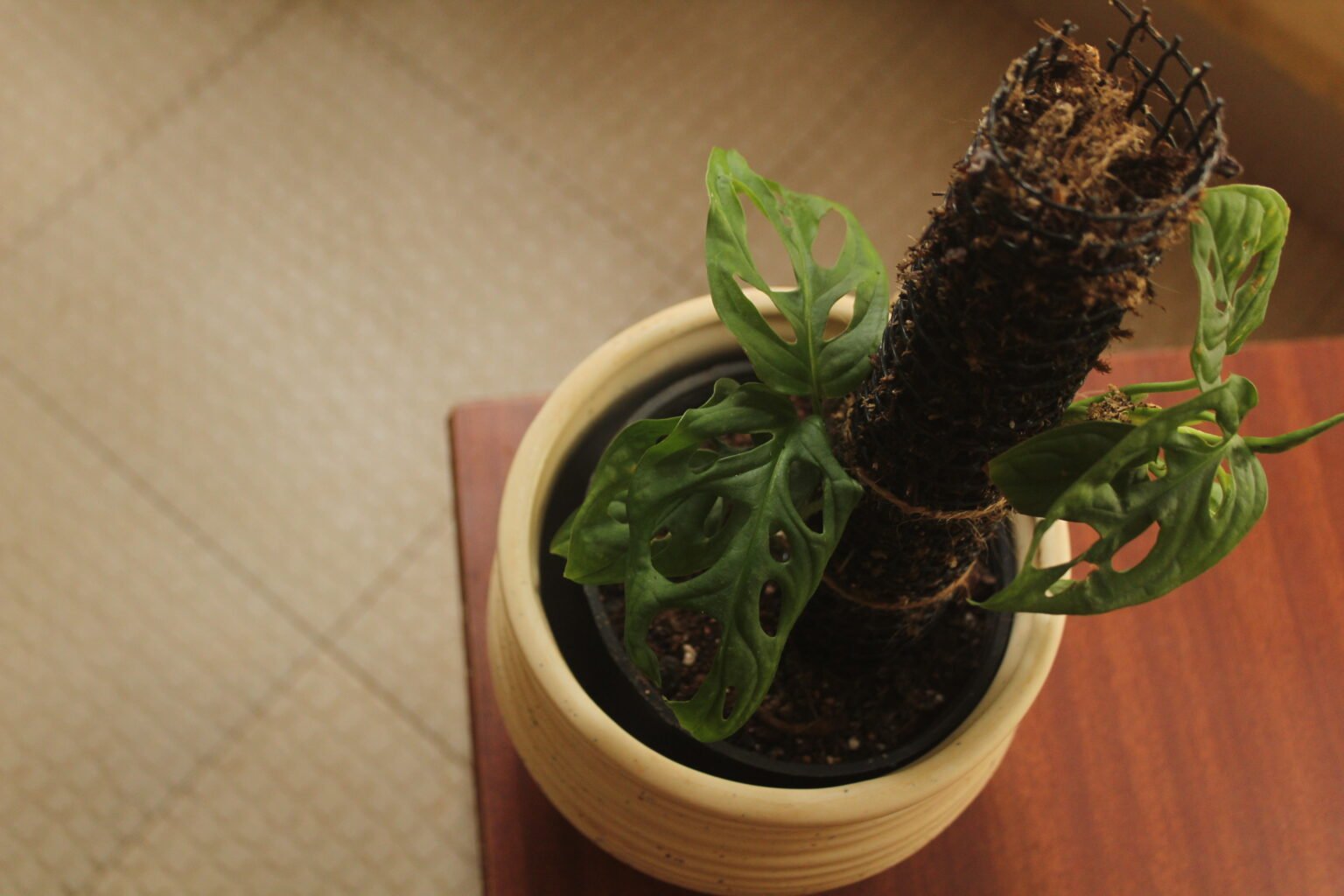
A moss pole gives climbing aroids, such as monsteras and philodendrons, a surface for their aerial roots to grip. In the wild, these plants climb tree trunks toward the light, and a pole lets them follow a similar growth habit indoors.
Some poles simply hold the plant upright. Others contain a moist growing medium that aerial roots can grow into and anchor themselves in.
Putting a pole in the pot won’t guarantee larger, more mature leaves. How the plant’s aerial roots attach to and grow into the support matters too.
So, Why Does a Moss Pole Matter?
Climbing aroids use aerial roots to grip trees and, when conditions allow, absorb water and nutrients that support growth. In a 2023 study, Sheeran and Rasmussen compared aerial and soil roots in three species: Anthurium, pothos, and philodendron. They found that:
- Aerial roots took up nitrogen more efficiently than soil roots in all three species.
- All three species grew more in high humidity, with aerial roots showing the greatest increase in biomass.
These findings suggest why a moss pole’s growing medium could make a difference. A moist pole that roots can grow into could give them access to water and available nutrients, as well as a place to attach. The study examined humidity and nutrient uptake, though, rather than testing moss poles directly.
Indoors, heating and air conditioning can dry out exposed aerial roots. Keeping a moss pole appropriately moist may give those roots a more suitable place to grow. How much the plant benefits will depend on the species and how you maintain the pole.
How Climbing Changes Aroid Leaf Development
Maturity can make climbing aroids look like wholly different plants. This transformation, called heteroblasty, shifts growth from juvenile to adult forms.
Take monstera deliciosa. Juvenile plants produce small, heart-shaped leaves, while mature plants develop much larger leaves with characteristic splits and holes called fenestrations. Philodendrons and syngoniums can undergo similarly dramatic changes in leaf size and shape.
These plants’ maturity is shaped by their growing conditions as well as their age, with sufficient light and a climbing surface both contributing.
As climbing aroids grow, they may produce:
- Larger leaf blades
- Thicker petioles
- Fenestrations, splits, or more pronounced lobes
- More compact growth with shorter internodes
Under favorable conditions, monstera deliciosa can develop fenestrations within a few years, though timing varies widely. Without adequate support or light, mature leaf characteristics may develop more slowly or inconsistently.
Should your climbing aroid continues producing juvenile leaves, inspect the light and make sure it has adequate vertical support.
A Moss Pole Solves Four Smaller Problems at Once.
Most plant parents underestimate small problems.
- Structural support. A mature Monstera can get heavy, and a pole helps keep its stems upright; without support, stems can droop and bend at the base, which may damage the tissue that transports water and nutrients.
- Humidity microclimate. Damp moss holds water against the stem and aerial roots and may raise humidity in their immediate vicinity. Keeping it moist encourages roots to grow into the pole, which helps anchor the plant and gives those roots water and any dissolved nutrients.
- If you train your aroid to climb, its leaves and stems are lifted away from the pot rim and damp soil, giving air more room to circulate and helping leaves dry, which may reduce the likelihood of fungal problems.
What Is a Moss Pole Made Up of?
A moss pole has three functional components:
- Structure: Keeps the pole upright.
- Substrate: Holds moisture and provides a surface for aerial roots.
- Containment: Holds the substrate in place.
How these components are arranged determines the pole’s moisture retention, rooting depth, weight, and stability.
The Two Main Construction Types
1. Filled poles
A mesh cylinder filled with sphagnum moss or coir gives aerial roots room to grow into the pole and reach moisture. The mesh holds the filling in place and provides structural support.
Filled poles hold more water and provide greater rooting depth, though the extra material makes them heavier and can increase cost.
2. Wrapped poles
A rigid core, typically PVC, bamboo, wood, or metal, covered with a thin layer of moss or coir secured by twine, fishing line, or fabric.
Wrapped poles are lighter and cheaper and hold their shape well. However, their thinner substrate restricts rooting depth and tends to dry out faster, particularly coir versions.
The key difference: Filled poles give aerial roots room to grow into the substrate, while wrapped poles mainly offer a surface to attach to.
The Core That Holds Up the Pole
The core is the main part that most plant parents don’t see.
| Core material | Typical spec | Pros | Cons |
|---|---|---|---|
| PVC pipe | 1″ or 1.5″ Schedule 40, ~$2 for 10 ft | Cheap, waterproof, cuts with a hacksaw | Non-biodegradable; plastic in the planter |
| Bamboo stake | 1/2″–1″ diameter | Renewable, biodegradable, lightweight | Can rot or split in constant moisture |
| Wood dowel / cedar plank | Hardwood or cedar | Rot-resistant (cedar), stiff | Heavier; non-cedar woods degrade |
| Metal rod / rebar | 3/8″–1/2″ diameter | Permanent, extremely stiff | Can rust; heavy and may sink into soil |
Rather than a separate core, filled poles have a mesh cage. Common hardware cloth options include galvanized or PVC-coated wire mesh. Some commercial poles use rigid plastic lattice tubes instead.
The Substrate Is the Business End of the Pole
The substrate determines how well a moss pole retains moisture, supports aerial root growth, and holds up over time. Three common options are sphagnum moss, coconut coir, and tree fern fiber.
Sphagnum Moss
Long-fiber sphagnum, commonly sourced from New Zealand or Chile, can hold around 20 times its dry weight in water. Its loose, fibrous structure lets aerial roots penetrate the material rather than just attach to the surface.
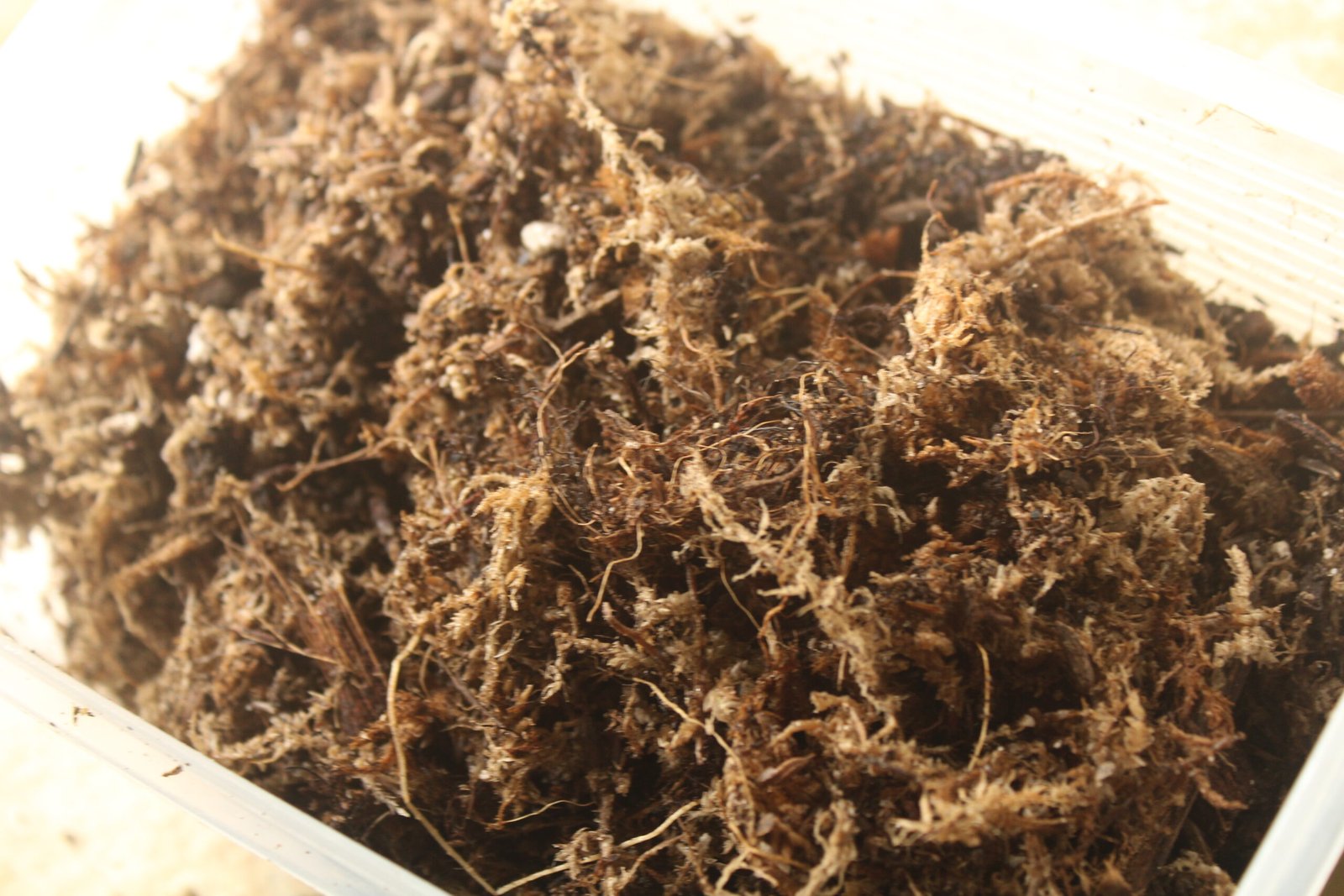
The drawback: Sphagnum can compact as it ages and become difficult to rewet when completely dry. Its harvesting also raises sustainability concerns.
Coconut Coir
Made from coconut husks, coir is an agricultural byproduct that’s cheaper than sphagnum. It’s durable, biodegradable, and commonly used in wrapped moss poles.
The drawback: Coir-wrapped poles tend to be thinner for rooting and may dry faster than sphagnum-filled ones, while aerial roots often attach to the fibers without growing much into the pole.
Tree Fern Fiber
A coarse medium that decomposes slowly and holds its form, tree fern fiber retains moisture while draining excess water. Its resistance to compaction helps preserve open air spaces around developing roots.
The drawback: It costs a lot and can be tricky to find. Its environmental impact varies with the tree ferns’ origin and how they’re harvested.
Which Plants Benefit From a Moss Pole?
The question “which plants benefit?” sorts cleanly into four tiers.
Tier 1: Plants That Strongly Benefit
These plants define the moss pole category. Examples include:
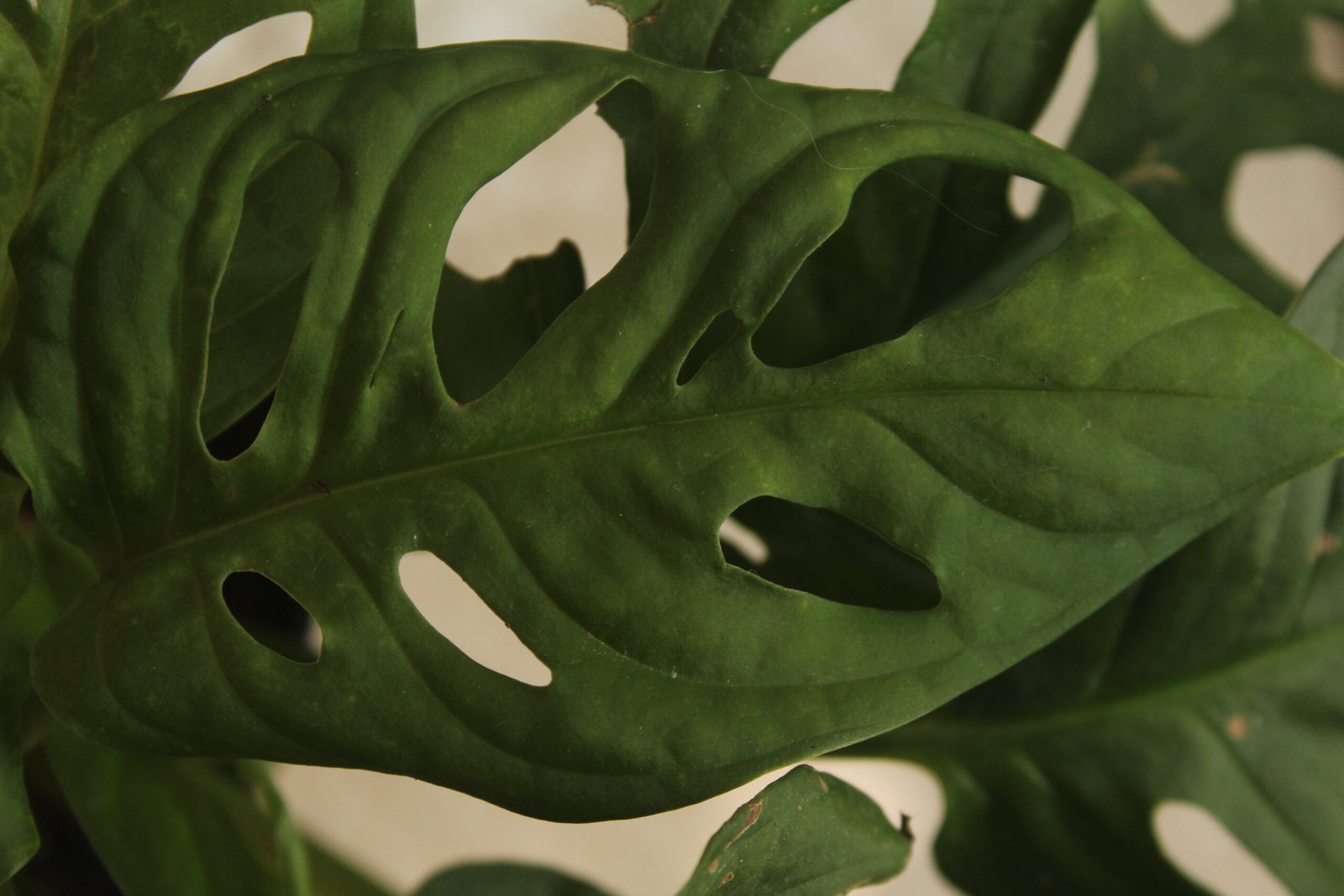
- Monsteras. M. deliciosa is the single plant most responsible for the moss-pole retail boom. M. adansonii (the “monkey mask”), M. standleyana, and M. siltepecana behave the same way.
- Philodendron (climbing types). P. hederaceum (heartleaf), P. ‘Micans’, P. ‘Brasil’, P. ‘Pink Princess’, P. erubescens, P. melanochrysum, P. verrucosum. There are more to this list. These are the philodendrons that stretch out, lean, or send long internodes, as if they are asking for a trunk.
- Pothos (Epipremnum). E. aureum (golden), ‘Marble Queen’, ‘N’Joy’, ‘Manjula’, ‘Cebu Blue’. Pothos famously tolerate hanging, but they only reach mature, fenestrated leaf form on a vertical substrate. Cebu Blue is one such example. The hanging form looks like a different species from the climbing form.
- Rhaphidophora. R. tetrasperma (the “mini Monstera”) and R. decursiva. These are vigorous climbers, and they just flop and refuse to mature without a pole support.
- Scindapsus. S. pictus (‘Exotica’, ‘Argyraeus’), S. treubii (‘Moonlight’, ‘Dark Form’). All are climbers, and the velvet-textured leaves grow noticeably larger as they climb.
- Syngonium. S. podophyllum (also known as arrowhead vine) and its many cultivars. The juvenile form is bushy and arrow-leaved, and as they mature and climb, they produce deeply lobed and almost unrecognizable leaves.
Tier 2: Beneficiaries With Conditions
These plants can benefit, but a standard wet sphagnum moss pole is not automatically the best support.
- Vining Hoyas. Many Hoyas climb using aerial roots and may grow better vertically, but they are adaptable and can also be grown as hanging plants. A pole is an upgrade, not a necessity.
- Climbing Anthuriums. Species such as Anthurium veitchii or warocqueanum often prefer very airy root conditions. A constantly damp moss pole can hold moisture against the stem and increase rot risk, so cork or wooden boards may suit them better.
- Shingling plants. Plants such as Rhaphidophora hayi and Monstera dubia press their leaves flat against a vertical surface, so they need a support to express that habit, but a firm, airy board is often preferred over moss.
Does a Moss Pole Need Watering?
Keep the sphagnum moss at a wrung-out-sponge level of moisture, and avoid letting it sit wet.
Here’s how to maintain it:
- Water thoroughly: Pour water down the pole gradually from the top so it soaks into the moss, and catch the runoff before it pools in the pot or spills onto nearby surfaces.
- Check moisture regularly: Check the moss’s moisture by hand, particularly near the top, where it dries fastest, and water when it starts to feel drier.
- Mist if needed: Light misting can temporarily moisten the surface, but it doesn’t replace thorough watering when the interior is dry.
Watering frequency hinges on drying speed. Indoor humidity, pole diameter, moss density, airflow, and root growth all shape drying time. A humid grow tent can keep a pole moist for days longer than heating or air conditioning would.
So, check the moss with your fingers to decide when to water.
How To Install and Maintain a Moss Pole?
Let’s get this thing set up.
1. Install the Pole
Go for a sturdy pole sized for future growth, ideally an extendable one that lets you add height as needed. If you can, install it when you repot. Secure the base close to the main stem without damaging the roots, and for larger plants, ensure firm anchoring and sufficient strength to support mature foliage.
2. Train the Plant
Position the climbing stem so its nodes and aerial roots touch the pole’s growing medium to encourage attachment. Secure it loosely with plant Velcro, soft ties, or clips, and avoid tight wire or zip ties that could damage the stem as it thickens. When the roots have attached and started growing into the pole, leave them in place.
3. Keep the Pole Moist
Moisture encourages aerial roots to grow into the substrate. Follow the watering method outlined earlier, checking the moss regularly rather than following a fixed schedule.
4. Maintain and Extend
Before the plant outgrows the pole, extend it. If using stackable sections, confirm the taller pole remains stable. Occasionally inspect the moss or other filling, and replace it if it’s broken down, compacted, or no longer absorbs water easily. If you fertilize through the pole, dilute it appropriately and watch for salt accumulation.
Give Your Plant the Support It Needs
When a Monstera is practically annexing the living room, a moss pole may be exactly what it requires. In a nutshell, the pole offers a climbing surface and, when kept moist, a place for aerial roots to grow.
Bigger, fenestrated leaves also depend on sufficient light, nutrition, and the plant’s overall condition. Choose a support that matches your plant and care routine, gives roots attachment points, and leaves room for continued climbing.